

Meaningful change rarely comes from a single adjustment, that’s particularly true for youth sports. It usually takes years of rule changes, training evolution, and cultural shifts to improve safety standards.
But sometimes, one upgrade can make a measurable difference.
In youth baseball and softball, that upgrade is the breakaway base.
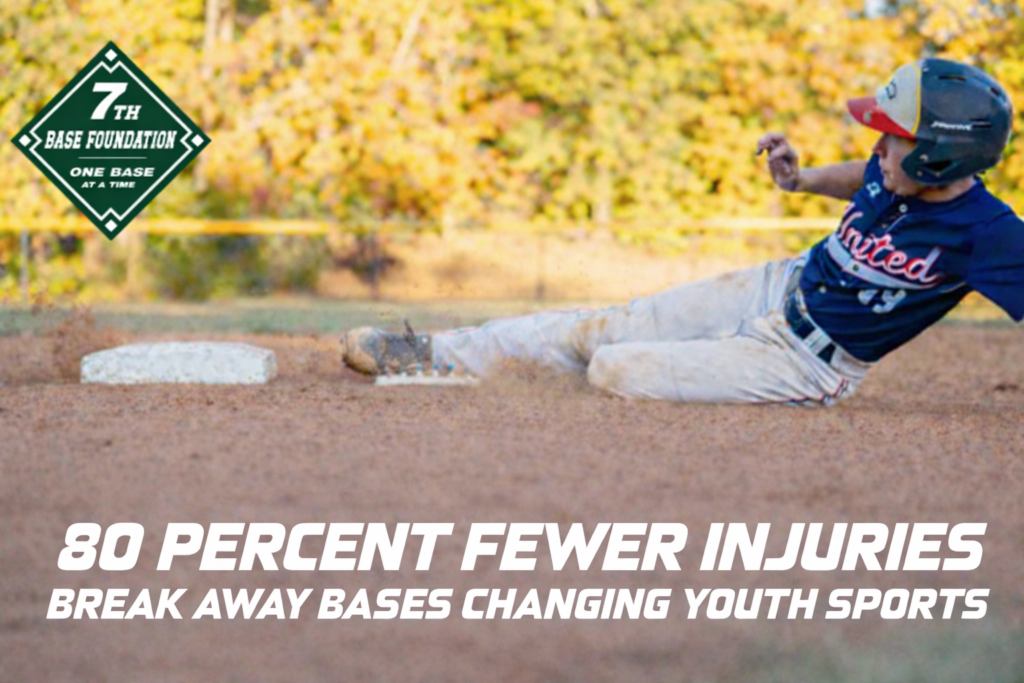
Sliding is an essential part of the game. It teaches timing, awareness, and competitive instinct. Young athletes learn when to commit, how to protect themselves, and how to gain an advantage. But sliding also carries risk, particularly when players collide with rigid, stationary bases that do not move on impact.
Traditional bases were never designed with modern injury prevention in mind. When a cleat catches the edge of a fixed base, the athlete’s momentum does not stop. The force transfers directly into the ankle and lower leg. In a fraction of a second, a routine play can turn into a injury.
What makes this issue especially important is that we already know how to reduce it.
According to the American Academy of Orthopedic Surgeons, breakaway bases can reduce sliding related injuries by up to 80 percent. That is not a minor improvement. It represents a dramatic shift in safety outcomes for youth athletes.
An 80 percent reduction means fewer injuries. It means more children staying on the field, developing skills and confidence without unnecessary setbacks.
Breakaway bases are designed to disengage from their anchor when force is applied during a slide. Instead of resisting impact, they release and shift. This simple mechanical difference significantly reduces the stress placed on the foot and ankle. The game remains the same. The competitiveness remains the same. The safety profile improves.
Despite the evidence, many youth leagues across the country continue using traditional bases. The reason is rarely resistance to safety. More often, it is financial limitation. Youth sports programs operate within tight budgets. Registration fees must cover uniforms, field maintenance, umpire costs, and facility expenses. Equipment upgrades may be delayed even when administrators understand the benefits.
This creates a quiet imbalance. Some leagues have access to modern, safer equipment. Others rely on outdated bases because replacing them feels financially out of reach. As a result, injury risk varies from one field to another.
Youth sports should not function this way. Safety should not depend on available resources alone.
When we talk about improving youth athletics, we often focus on advanced training methods or exposure opportunities. Those conversations matter. But foundational safety measures deserve equal attention. If a single equipment upgrade can reduce injuries by such a significant margin, it becomes one of the most practical steps leagues can take.
At The Seventh Base Foundation, our mission centers on this opportunity. We fund breakaway bases for youth baseball and softball programs nationwide because the data is clear and the impact is measurable. Each set of upgraded bases protects players season after season. It is a long term investment in prevention.
The phrase “changing youth sports” may sound ambitious, but meaningful change often begins with something straightforward and focused. Installing safer bases does not alter the spirit of the game. It strengthens it. It ensures that competition is defined by skill and effort, not avoidable injury risk.
An 80 percent reduction in injuries is not just a statistic. It represents healthier athletes, uninterrupted seasons, and greater peace of mind for families. It reflects a shift from reacting to injuries toward preventing them.
When leagues choose to upgrade, they are making a clear statement. They are prioritizing protection. They are aligning with medical recommendations. They are building safer environments for young athletes to grow.
One upgrade. Measurable results. Lasting impact.
That is how youth sports change for the better, ONE BASE AT A TIME*