

Baseball and softball are games built on repetition. Repeated swings. Repeated throws. Repeated slides. Each repetition carries risk, especially when the playing environment has not kept pace with modern safety standards. While coaching and conditioning matter, equipment plays a critical role in either increasing or reducing that risk.
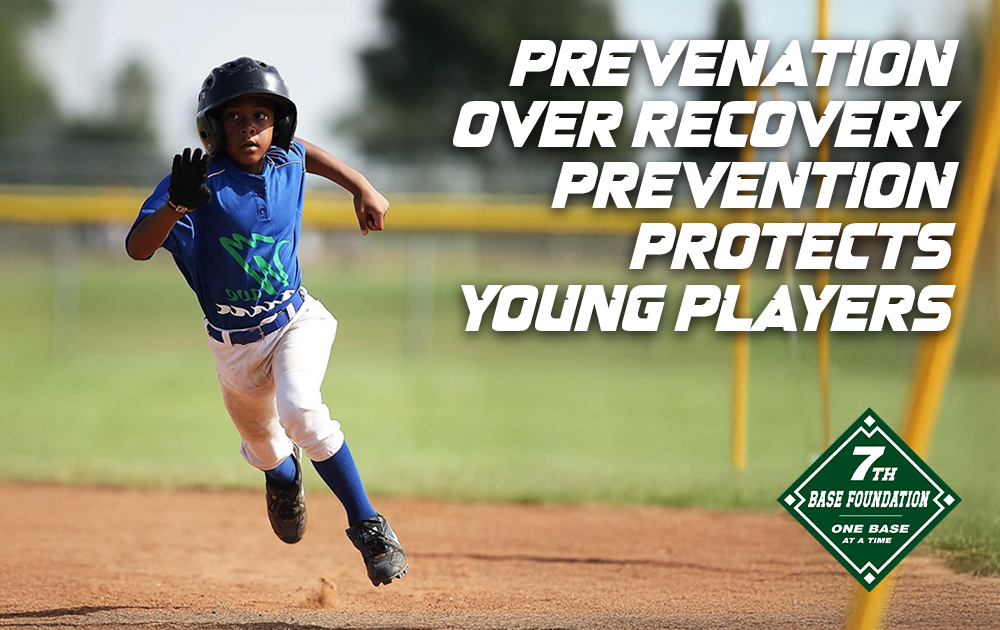
The smarter approach to youth athlete safety is simple. Focus on prevention not recovery.
The Cost of Waiting
Sliding-related ankle injuries are common in youth baseball and softball, particularly when traditional stationary bases are used. When a cleat catches the edge of a rigid base, the base does not give, and the force transfers directly into the ankle and lower leg.
This is where prevention becomes critical. While recovery from these injuries can take months to heal many of these injuries can be prevented in the first place with breakaway base systems designed to reduce impact and release on contact.
The Evidence Is Clear
Breakaway bases were developed to address this exact issue. Unlike fixed bases, they are engineered to release upon impact. When a player slides into the base with force, it disengages from its anchor, reducing stress on the foot and ankle.
According to the American Academy of Orthopedic Surgeons, breakaway bases can reduce sliding related injuries by up to 80 percent. That statistic alone shifts the conversation. An 80 percent reduction is not incremental improvement. It is a fundamental safety upgrade.
In most areas of youth sports, we adopt equipment changes quickly when research supports them. Helmets evolve. Protective gear improves. Pitch count guidelines are implemented. Field safety should follow the same logic.
When we know how to significantly reduce injury risk, choosing not to act becomes harder to justify.
A Smarter Investment in Safety
Many youth leagues want to upgrade to breakaway bases but face budget constraints. Equipment replacement competes with uniforms, field maintenance, insurance, and operational costs. For smaller programs, safety improvements may be delayed simply because funds are limited.
But prevention is often more cost effective than recovery.
The financial cost of a serious ankle injury can include emergency care, imaging, orthopedic consultations, and physical therapy. There is also time away from school, lost development on the field, and emotional strain. When compared to the long term benefits of installing safer bases, the investment in prevention becomes clear.
More importantly, prevention protects futures.
Youth sports are not only about competition. They build discipline, resilience, teamwork, and self-confidence. When injuries and recovery interrupt that process, the effects extend beyond the physical.
Installing breakaway bases is not about removing intensity from the game. It is about allowing young athletes to compete fully without facing unnecessary risk.
Building a Culture of Prevention
Protecting young athletes requires a shift in mindset. Instead of reacting to injuries, leagues can take proactive steps to reduce them. Field safety assessments, equipment upgrades, and partnerships focused on prevention all contribute to a stronger safety culture.
At The Seventh Base Foundation, our mission is centered on this proactive approach. We fund breakaway bases for youth baseball and softball programs nationwide because we believe safety should be built into the field itself. Every upgraded base represents a preventive measure that will protect players season after season.
Prevention does not generate headlines. Recovery stories often do. But true leadership in youth sports is measured by the risks we eliminate before harm occurs.
The smarter way to protect young athletes is not waiting for the next injury. It is recognizing preventable risk and addressing it directly.
When we prioritize prevention over recovery, we strengthen more than ankles. We strengthen confidence, continuity, and the integrity of the game.
And that is a standard worth investing in, ONE BASE AT A TIME.